
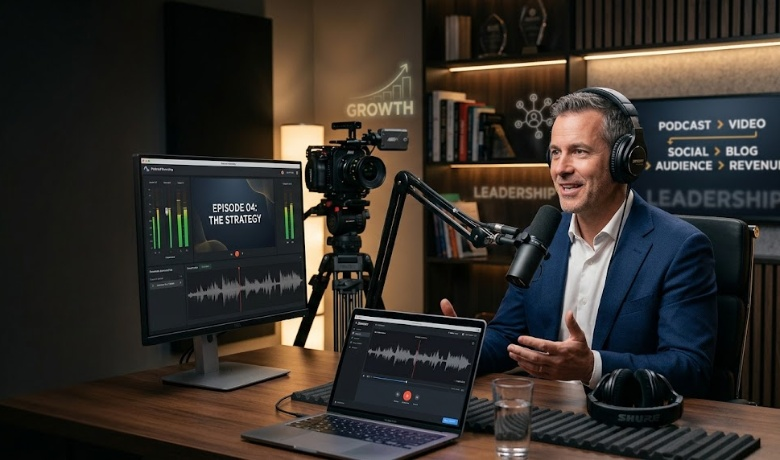
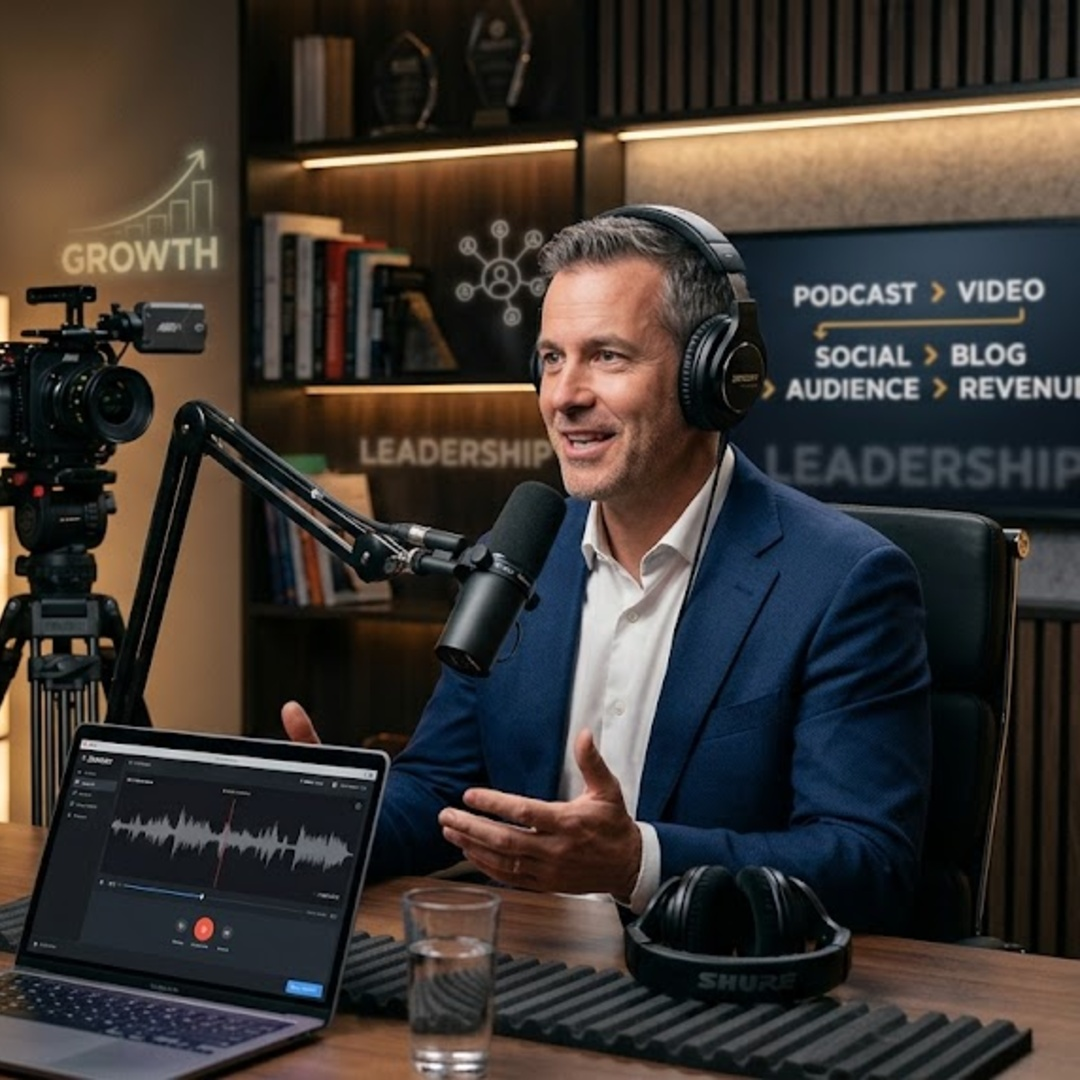
For years, CEOs and business leaders have invested heavily in traditional marketing, paid advertising, social media, and corporate content. Yet there is one powerful strategy many executives still overlook: becoming a guest on relevant podcasts.
Podcast guesting is often viewed as a simple way to get exposure. A CEO joins a podcast, answers questions, shares a few stories, and waits for the episode to be published. But that approach misses the bigger opportunity.
A well-planned podcast appearance can become much more than a 45-minute conversation. It can strengthen a CEO's personal brand, create valuable business relationships, generate content, support search visibility, and introduce a company to highly relevant audiences.
The real strategy is not simply getting booked on podcasts. The strategy is knowing how to turn every podcast appearance into a long-term business asset.
In this guide, we will explore the podcast strategy many CEOs are missing and explain how business leaders can get more value from every podcast conversation.
People do not always connect with a company through its logo, website, or advertisement. They often connect with the people behind the business.
For CEOs, this creates a major opportunity.
A podcast gives an executive something many other marketing channels cannot easily provide: extended time to communicate ideas in their own voice. Instead of delivering a short advertisement or writing a small social media post, a CEO can explain experiences, lessons, opinions, strategies, and industry insights in a natural conversation.
This can make a business leader more recognizable and relatable.
When the right audience repeatedly sees a CEO discussing meaningful topics, that person can gradually become associated with expertise in a particular area.
For example, a technology CEO who regularly discusses artificial intelligence, business transformation, and innovation can begin building a recognizable position around those subjects.
The key is consistency and relevance.
One podcast episode may create awareness. Several strategic appearances can create authority.
Many executives approach podcast guesting with one simple objective:
“I need exposure.”
Exposure is useful, but it should not be the entire strategy.
A podcast appearance should ideally have a clear business purpose.
Before accepting an invitation, a CEO should ask:
Who listens to this podcast?
Does the audience match our ideal customers?
What topic can I own?
What valuable insight can I provide?
What do I want people to remember about me?
Can this conversation create future relationships?
Can the episode be repurposed into additional content?
These questions change the entire approach.
Instead of appearing on random podcasts simply to increase the number of appearances, CEOs can focus on strategic opportunities where the audience, subject, and business objectives align.
Brand awareness is one benefit of podcast guesting, but it is only the beginning.
A strong podcast appearance can contribute to several areas of a business simultaneously.
It can help a CEO:
Build professional authority
Strengthen personal branding
Reach niche audiences
Develop relationships with hosts
Create social media content
Generate video clips
Support thought leadership
Improve online discoverability
Create referral opportunities
Start conversations with potential customers
Build credibility with partners and investors
This is why podcast guesting should be treated as a content and business development strategy rather than simply a publicity activity.
A common mistake is assuming that the biggest podcast is always the best podcast.
That is not necessarily true.
Imagine a CEO sells enterprise cybersecurity software. Appearing on a massive general-interest podcast might generate thousands of listeners, but only a small percentage may be relevant to the business.
A smaller podcast focused specifically on enterprise technology leaders could potentially deliver a much more valuable audience.
This is an important principle:
Relevance can be more valuable than reach.
Before accepting a podcast invitation, CEOs should examine the show's audience, previous guests, topics, distribution channels, and overall reputation.
The goal is not to collect appearances.
The goal is to appear in front of the right people.
Another strategy many CEOs overlook is positioning.
A CEO should not try to talk about everything.
Instead, identify several topics that connect personal expertise with the company's broader market.
For example, a SaaS founder might focus on:
Scaling a technology company
Building high-performing teams
AI and business automation
Lessons from failed product launches
Customer retention
The future of SaaS
These themes create a recognizable identity.
When podcast hosts, journalists, customers, and other business professionals repeatedly encounter the same areas of expertise, the CEO becomes easier to remember.
Strong positioning also makes it easier for podcast hosts to understand why they should invite that person.
Facts and statistics can demonstrate knowledge, but stories often make people remember the person telling them.
CEOs have something many content creators do not have: real business experiences.
Every company has challenges.
There may have been a difficult launch, a failed strategy, a major customer problem, a hiring mistake, a surprising success, or a moment when the company had to change direction.
These experiences can become powerful podcast stories.
Instead of only saying, “Customer experience is important,” a CEO can explain what happened when the company discovered a major customer experience problem and how the team responded.
That creates a much stronger conversation.
The best podcast guests do not simply provide information.
They provide perspective.
Preparation is important, but CEOs should avoid memorizing complete answers.
A podcast should feel like a conversation.
Before recording, prepare a short list of important points:
Three major ideas you want the audience to remember.
Two personal or business stories that support those ideas.
A few practical lessons listeners can use.
One clear message connected to your area of expertise.
A simple explanation of what your company does.
This provides structure without making the conversation sound artificial.
The objective is to be prepared enough to communicate clearly while remaining natural.
This is where the strategy becomes significantly more powerful.
A single podcast episode can produce far more than one piece of content.
For example, one interview could become:
Short-form video clips
LinkedIn posts
Quote graphics
Blog content
Email newsletter content
YouTube Shorts
Social media captions
Founder insights
Website content
Sales enablement material
This means the original podcast recording becomes a source of additional marketing assets.
Instead of thinking:
One interview = one episode
Think:
One interview = an entire content opportunity.
For a busy CEO, this can be extremely valuable because the executive does not need to create every piece of content from scratch.
The first 30 days after an episode goes live can be used strategically.
During the first few days, share the episode with your existing audience. Explain why the conversation matters instead of simply posting a link.
During the following weeks, publish short insights from the interview.
For example, if the podcast discussion was about leadership, a CEO could publish one key lesson from the conversation on LinkedIn.
Another week could feature a short video clip.
A third post could discuss a mistake mentioned during the interview.
This creates multiple touchpoints around the original conversation.
The podcast becomes the source material rather than the final marketing asset.
There is another benefit that is often underestimated: relationships.
When a CEO appears on a podcast, the relationship does not have to end when the recording finishes.
The host may know:
Other entrepreneurs
Investors
Industry experts
Potential partners
Journalists
Customers
Event organizers
Other podcast hosts
A good podcast conversation can become the beginning of a professional relationship.
After the episode is published, CEOs can continue the relationship by engaging with the host's content, sharing the episode, discussing industry topics, or exploring potential collaborations.
This is much more valuable than treating every podcast appearance as a one-time promotional event.
Modern business leaders are increasingly becoming brands themselves.
People may know a company because they recognize its founder or CEO.
Podcast interviews can support this process because they allow audiences to hear the executive explain ideas in a personal and authentic way.
Over time, these appearances can help establish associations such as:
CEO + AI
Founder + Leadership
Executive + Business Growth
Entrepreneur + Innovation
The stronger the association, the easier it becomes for people to remember the executive when a relevant business need appears.
Podcast appearances can also create useful digital footprints.
When a podcast episode is published on a website, it may include the guest's name, company, professional background, episode description, topics, and links.
If the interview is supported by a strong episode page, transcript, video, social content, and other relevant resources, the conversation can continue attracting attention after publication.
This is particularly valuable for CEOs who want to strengthen their online presence around specific industry topics.
However, podcasting should not be treated as a guaranteed SEO shortcut.
The real value comes from creating useful, relevant, and well-distributed content around the appearance.
Podcast success should not be measured only by the number of listeners.
A CEO should consider broader signals.
Useful metrics can include:
Website traffic
Referral traffic
LinkedIn profile visits
Social engagement
New connections
Qualified conversations
Partnership inquiries
Brand mentions
Content engagement
Leads influenced by podcast appearances
For example, a podcast with 2,000 highly relevant listeners may be more valuable to a B2B company than an appearance with 50,000 unrelated listeners.
The right measurement framework depends on the company's goals.
The biggest opportunity comes when podcast guesting becomes a repeatable process.
Instead of searching for opportunities randomly, companies can create a system.
The process might look like this:
Step 1: Define the ideal audience
Identify the industries, job titles, business sizes, and markets that matter most.
Step 2: Build a podcast list
Research podcasts whose audiences overlap with those targets.
Step 3: Develop positioning
Create a clear description of the CEO's expertise and unique perspective.
Step 4: Prepare topics
Develop several strong conversation ideas instead of sending a generic pitch.
Step 5: Conduct outreach
Contact relevant podcast hosts with personalized messages.
Step 6: Prepare for interviews
Research the host, audience, previous episodes, and likely questions.
Step 7: Record the conversation
Focus on practical insights, stories, and useful perspectives.
Step 8: Repurpose the content
Turn the interview into multiple content formats.
Step 9: Promote the episode
Share it through relevant company and personal channels.
Step 10: Follow up
Stay connected with the host and track business outcomes.
This system makes podcast guesting much more scalable.
A great podcast guest does not need to be famous.
What matters more is whether the guest can provide something valuable to the audience.
Strong podcast guests usually have:
A clear point of view
Real experience
Interesting stories
Practical advice
Strong communication skills
A willingness to be authentic
Knowledge of their audience
The ability to explain complex ideas simply
A CEO who can combine expertise with storytelling can create a memorable interview.
As competition for attention increases, business leaders need ways to communicate beyond traditional advertising.
Podcasting offers a unique environment because audiences choose to spend significant time listening to conversations.
That creates an opportunity for CEOs to communicate ideas at greater depth.
The future of podcast guesting is also likely to become increasingly connected with video, short-form content, social media, search, newsletters, and personal branding.
This means a podcast appearance should no longer be viewed as an isolated marketing activity.
It can become part of a larger content ecosystem.
The biggest podcast strategy many CEOs are missing is simple:
Don't treat the podcast appearance as the product. Treat the conversation as the starting point.
The real value begins after the recording.
A strategic podcast appearance can become a long-term business asset when it is connected to personal branding, content repurposing, networking, thought leadership, search visibility, and business development.
The goal is not to appear on as many podcasts as possible.
The goal is to appear on the right podcasts, discuss the right ideas, reach the right audience, and maximize the value of every conversation.
For CEOs and founders, that shift can turn podcast guesting from a simple publicity tactic into a repeatable growth strategy.
1. Why should a CEO become a podcast guest?
Podcast guesting gives CEOs an opportunity to share their expertise, tell their business stories, build authority, connect with relevant audiences, and strengthen their personal brand. It can also create content and networking opportunities beyond the original interview.
2. Does podcast guesting help generate leads?
It can. Lead generation depends on the podcast's audience, the relevance of the conversation, the CEO's positioning, and what happens after the episode is published. A highly targeted podcast can create valuable business conversations even with a relatively small audience.
3. How many podcasts should a CEO appear on?
There is no universal number. Quality and relevance are generally more important than volume. A CEO should prioritize podcasts whose audiences closely match the company's ideal customers, partners, or industry community.
4. What should a CEO talk about on a podcast?
CEOs should discuss subjects connected to their expertise and experience. Strong topics can include industry trends, leadership lessons, business challenges, innovation, mistakes, customer experiences, company-building lessons, and practical advice.
5. Can one podcast interview create multiple pieces of content?
Yes. A single interview can potentially become short videos, LinkedIn posts, blog ideas, quote graphics, newsletters, social media posts, and other content formats. The exact output depends on the recording and available production resources.
6. Is podcast guesting useful for B2B companies?
Yes. Podcast guesting can be particularly useful for B2B companies because niche podcasts often attract highly specific professional audiences. Reaching a smaller but highly relevant audience can be more valuable than reaching a large general audience.
7. How should CEOs choose the right podcast?
Look beyond download numbers. Consider the podcast's audience, topics, previous guests, industry relevance, reputation, distribution channels, and whether its listeners resemble your ideal customers or professional network.
8. How can CEOs measure podcast success?
Success can be measured through website visits, referral traffic, social engagement, profile visits, new professional connections, qualified leads, partnership opportunities, brand mentions, and other business outcomes.
9. Should CEOs prepare before a podcast interview?
Absolutely. Preparation helps CEOs communicate their ideas clearly. However, preparation should focus on key messages, stories, and examples rather than memorizing scripted answers.
10. What is the biggest mistake CEOs make with podcast guesting?
One of the biggest mistakes is focusing only on exposure. A podcast appearance becomes much more valuable when the CEO has a clear objective, targets a relevant audience, prepares strong ideas, repurposes the content, and maintains the relationship with the host afterward.